

Landscape Irrigation Design & Installation in New Jersey
Trusted Irrigation Design Experts Serving New Jersey Homeowners and Property Managers
Environmental Designers Irrigation provides landscape irrigation design and system installation across New Jersey for homeowners, property managers, and commercial sites. Leaders in irrigation since 1990, our team maps your property and sets the irrigation zones, so every area gets the right amount of water on the right schedule.
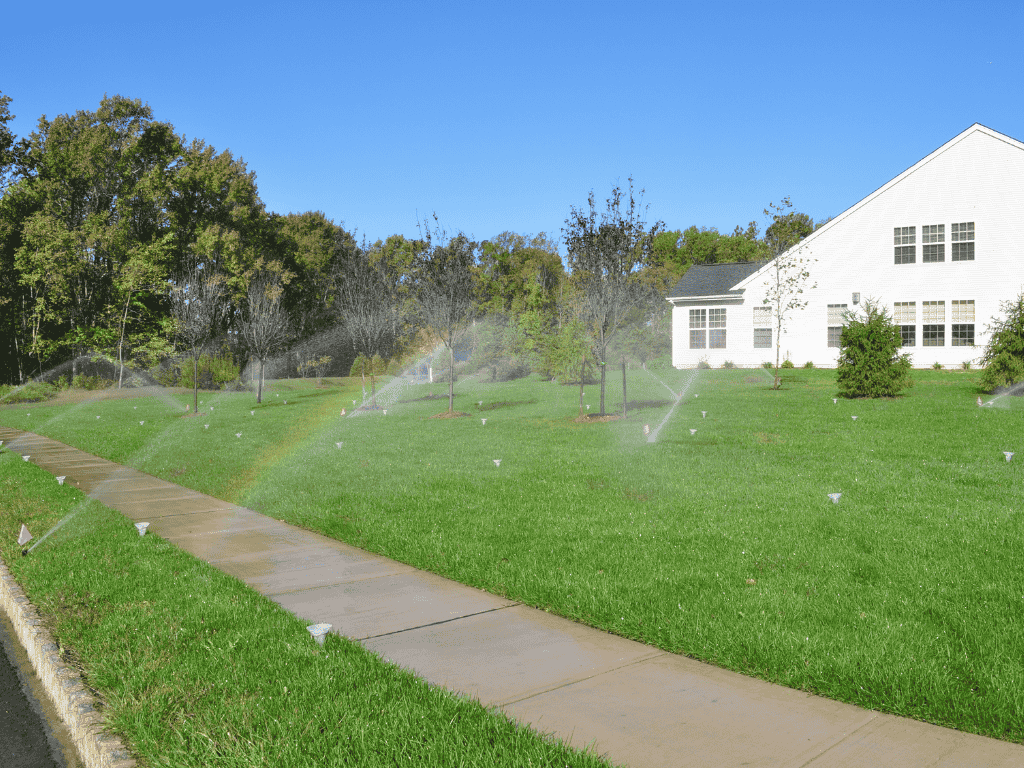
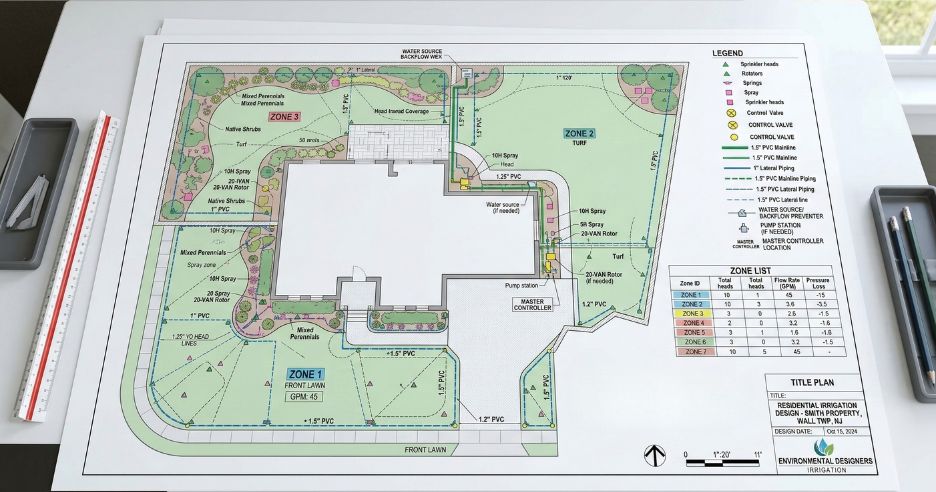
Custom Irrigation Design
Irrigation system designs vary depending on soil conditions, site topography, water source, and local environmental conditions. Getting the design right at the start is what separates a system that runs efficiently for years from one that wastes water and needs constant repairs.
At Environmental Designers Irrigation, our experts take all of these site conditions into account and apply the best irrigation parts to provide an efficient, smart irrigation system. For single-family homes, our residential landscape irrigation service covers design through installation.
Irrigation Zones & Hydrozoning
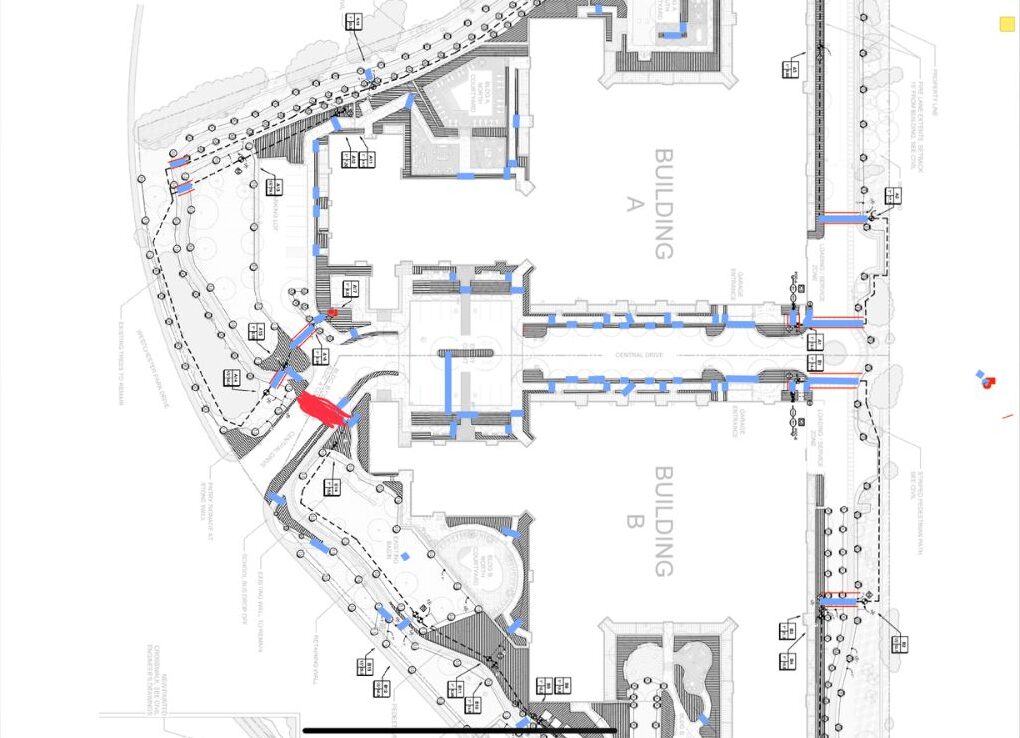
Good landscape irrigation design starts with dividing the property into irrigation zones. Zones should be separated based on plant type, sun exposure, and irrigation method, so that a shaded planting bed isn't watered on the same schedule as a lawn in full sun.
This is the core of hydrozoning, which means grouping plants with similar water needs so no area is overwatered to keep another area alive. Soil type influences how often each zone runs, since heavier soils hold water longer and lighter soils drain fast. (Our guide to soil types and their challenges breaks down how each behaves.)
Water Pressure & Flow Design
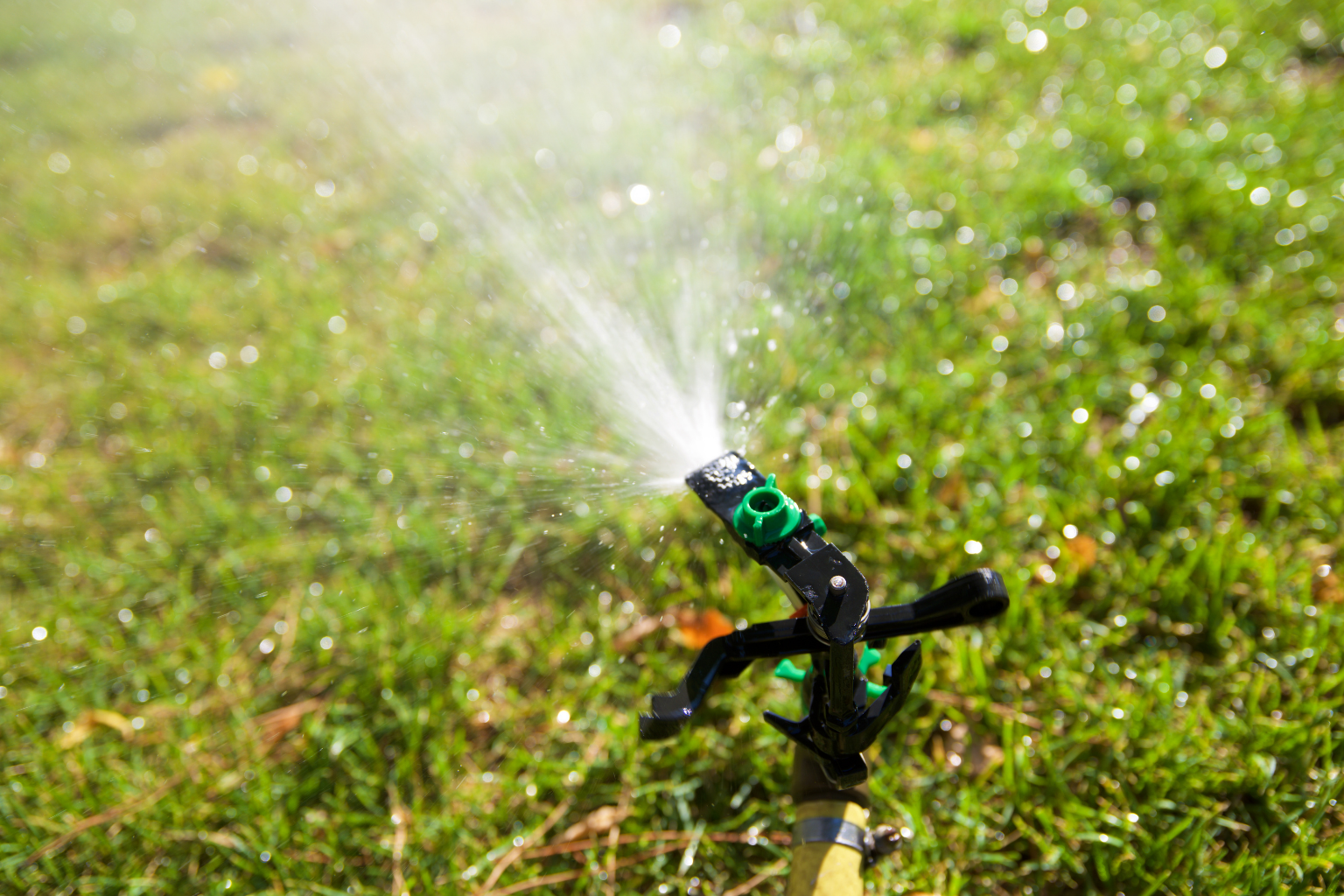
Pressure and flow drive the rest of the design. Flow rate is measured in gallons per minute (GPM), and water source pressure is measured in pounds per square inch (PSI). A design has to match the number and type of heads to the available pressure, because too little pressure causes uneven coverage and too much causes misting and wasted water.
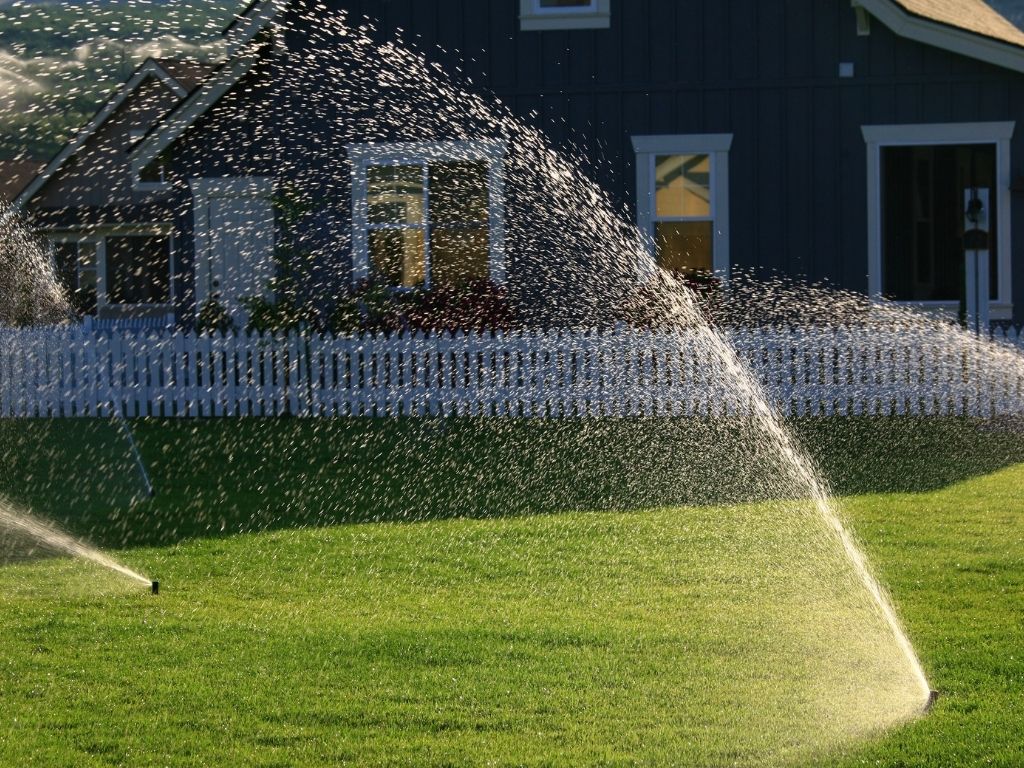
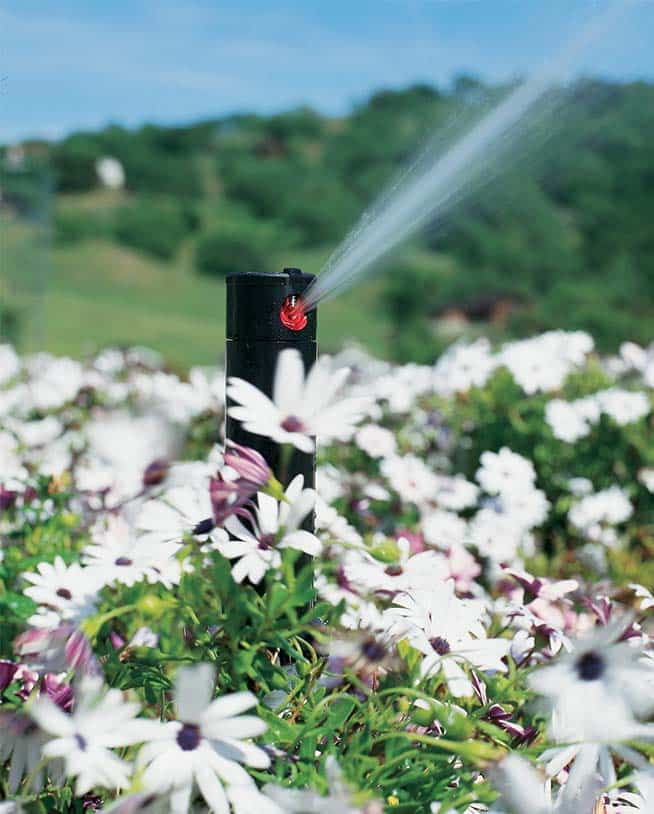
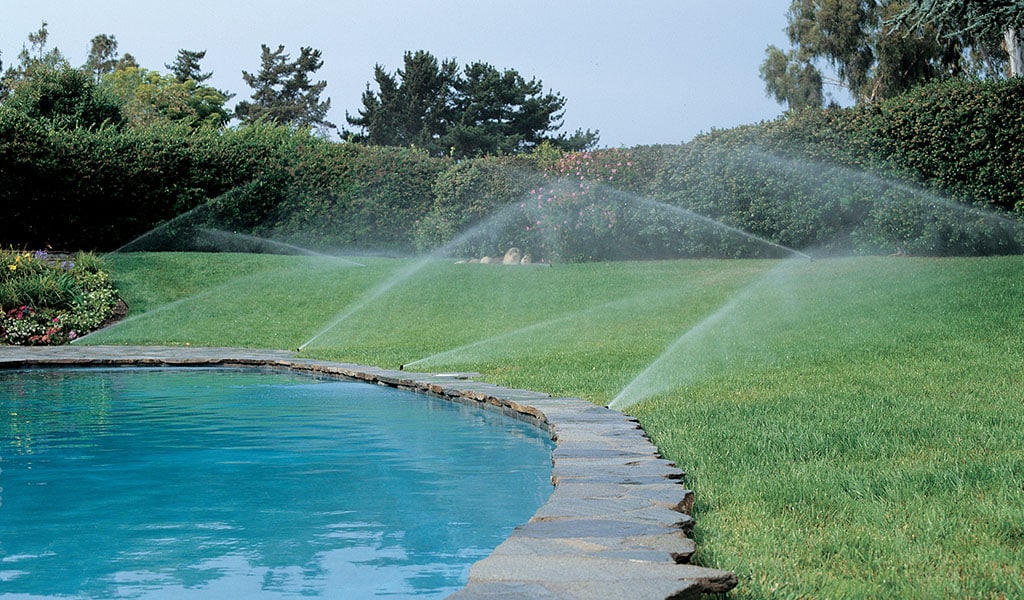
Sprinkler heads are laid out for head-to-head coverage so their spray patterns overlap and prevent dry spots. The right count depends on zone size and pressure — our post on how many sprinkler heads per zone covers the math.
A well-designed irrigation controller can manage 6 to 12 zones, and smart controllers adjust each zone's schedule based on weather and soil moisture, saving roughly 20% on water use compared to a fixed timer.
Proudly Serving New Jersey for Over 35 Years
Landscape Irrigation Design: Drip Irrigation or Sprinklers?
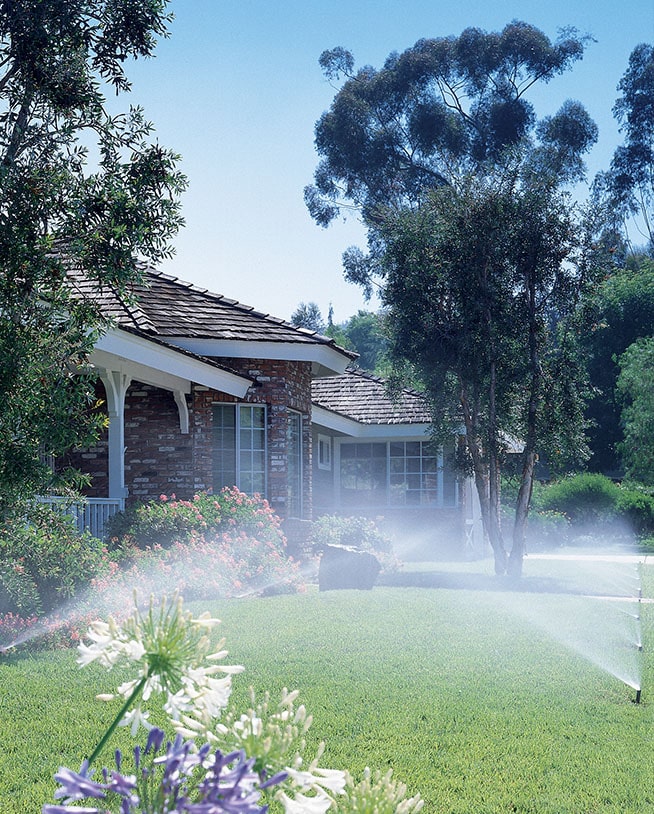
The type of irrigation components you choose depends on whether you are watering lawns or garden beds. Drip irrigation is better suited for planting beds, shrubs, and gardens, while sprinkler heads are better suited for open lawn areas. (For a fuller breakdown, see our comparison of sprinkler system types.)
Drip irrigation delivers water slowly, at roughly 1 to 2 gallons per hour, placing it right at the root ball where plants use it. It operates at low pressure, typically 20 to 30 PSI, which is why drip zones use a separate pressure regulator from the sprinkler zones.
Because the water goes straight to the roots, drip significantly reduces evaporation and runoff and promotes healthier plants. Sprinkler zones cover more ground faster, which makes them the right tool for turf. A good design uses both, on separate zones, each set up for what it's watering.
Why Choose Environmental Designers Irrigation for Landscape Irrigation Design?
Our Work
We specialize in water management services, water-saving technologies,
revamping antiquated systems, auditing, maintenance service, and installation.
We Let Our Clients Do the Talking
Get the Design Right Before the Pipe Goes in the Ground
A system built on incorrect pressure or poor zone layout cannot be fixed with a controller later.
We measure your water supply and map the property first to deliver a smart irrigation system.
Frequently Asked Questions


Latest Irrigation Tips, Trends, and Insights

Why Sprinkler Wire Splices Fail Underground: And How to Fix It
Gov. Murphy Signs Irrigation Enforcement Bill: What NJ Homeowners Should Know