
How Fertilizer and Watering Work Together for a Healthier Lawn

Why Fertilizer and Watering Are the Foundation of a Healthy Landscape
Many homeowners struggle to keep lawns and gardens healthy because they underestimate how much fertilizer and watering techniques matter. Get it wrong, and plants turn weak, stressed, or dead despite your best efforts. Once you understand how water delivers nutrients to the root zone, you can keep your plants thriving and your landscape lush year-round.
Homeowners often treat watering as a mindless chore, which quietly sabotages plant health. Water has to reach the root zone to do its job, and it has to carry dissolved nutrients with it. Coordinate your watering so it drives moisture and nutrients deep into the roots, and your plants absorb both, growing strong and resilient.
It’s easy to tip the balance the wrong way and damage your landscape. Overwatering can kill trees and shrubs and drown roots in oxygen-starved mud. Container plants are especially vulnerable: rain rarely soaks through to the bottom of a pot, so skipping a watering after a light shower can silently stress them. Manage your watering carefully and you protect your plants, avoid runoff that harms local waterways, and keep growth healthy.
The fix is a clear, actionable watering plan for every type of plant in your landscape. This guide covers step-by-step strategies from container pots to full lawns, plus weather-based smart irrigation, so you can keep plants thriving without guesswork.
I’m Gaetano Virone, founder of Environmental Designers Irrigation, and with over 30 years of hands-on experience designing and auditing irrigation systems across New Jersey, I’ve seen how precision fertilizer and watering practices transform landscapes while cutting waste and cost. In this guide, I’ll share the practical frameworks and proven strategies that have shaped my approach to sustainable, efficient plant nutrition and hydration.
This guide focuses on the physiological relationship between watering and fertilization for home lawns and landscapes. For proactive tuning, zone checks, and seasonal prep, visit our irrigation seasonal maintenance system page. If you are looking to integrate weather-based automation and prevent root-drowning runoff, learn how to upgrade your smart irrigation system.

Mastering Fertilizer and Watering for Every Environment
Across Monmouth and Ocean Counties, from the sandy soils of Spring Lake to the richer loams in Marlboro Township, I’ve learned that a “one size fits all” watering approach is a recipe for a brown lawn. Every environment has its own rules.
Getting water to actually feed your plants comes down to soil. Soil structure and moisture retention decide how efficiently water and dissolved nutrients reach the roots. Sandy soils common along the Jersey Shore drain fast and need shorter, more frequent watering, while heavier loams hold moisture longer and need deep, infrequent cycles to avoid waterlogging.
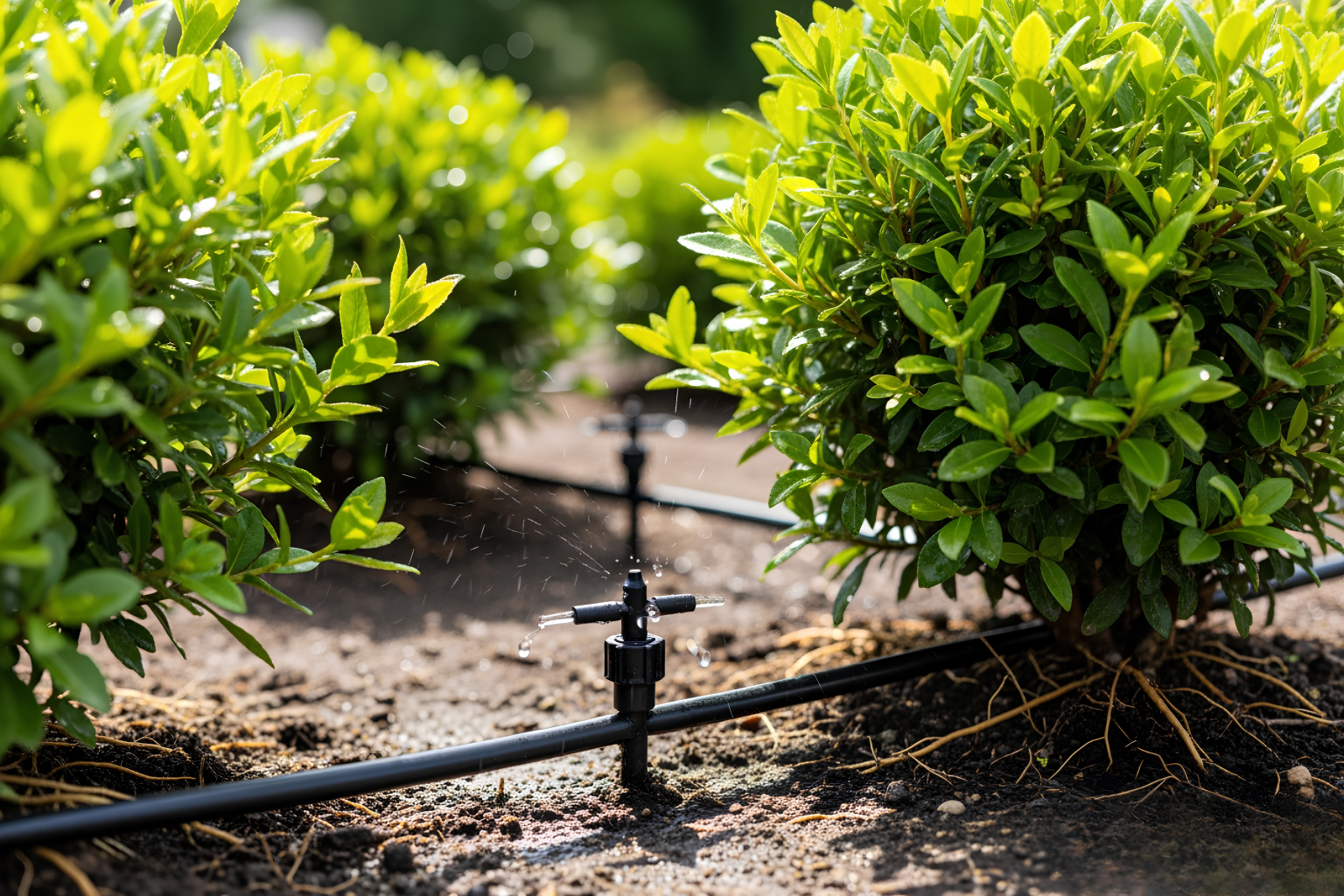
Microbial activity is another silent hero. Research shows that organic amendments like compost can increase microbial carbon by 62.2%, creating a living soil that helps break down fertilizers into forms plants can actually digest. When we talk about precise water and fertilizer application, we are looking at a synergy where water acts as the vehicle for these nutrients.
Precision Fertilizer and Watering for Containers
If you’ve ever wondered why your hanging baskets in Howell Township look fried by July, it’s usually a root-space issue. In a garden, roots go deep to find moisture. In a pot, they’re trapped.
Container plants face two watering hurdles: limited root space and fast drainage. A pot holds little soil, so it dries out far quicker than open ground, especially in summer heat. Water until it drains from the bottom, which tells you the full root ball got moisture, then let the top inch dry before the next cycle.
Here’s a simple watering guide by pot size:
10″ diameter pots: about 1/2 gallon per watering.
12″ diameter pots: 1/2 to 3/4 gallon.
14″ diameter pots: about 1 gallon.
16″–18″ diameter pots: up to 2 gallons.
Drip emitters sized to each pot take the guesswork out of this and deliver water slowly enough that it soaks in instead of running off.
Weather is the biggest variable. On a hot, breezy day in Manalapan, a container might need water twice. If you’re just starting out, watch this video to learn how to choose the best plants, containers, and soil is a great resource for setting up your container environment for success.
Optimizing Fertilizer and Watering for Lawns and Landscapes
When we move from pots to the full lawn, the strategy shifts. For our New Jersey cool-season grasses, like Tall Fescue or Kentucky Bluegrass, the focus is on deep, infrequent watering and slow-release nitrogen.
Returning your grass clippings to the lawn is one of the easiest ways to boost your fertilizer and watering efficiency. Those clippings act as a natural, slow-release fertilizer, adding about 1.0 lb of nitrogen per 1,000 square feet per year back into your soil.
For trees and shrubs, the “drip line” the area directly under the outer circumference of the branches is where the feeder roots live. Applying fertilizer near the trunk is a waste; you want to target that drip line.
I often tell my clients that the Best Time to Water Grass is between 4:00 AM and 8:00 AM. This allows the blades to dry before the sun gets too hot, preventing fungal diseases that love damp, nighttime grass. A Smart Irrigation System Landscape Facility Green can automate this perfectly, ensuring your lawn gets exactly what it needs based on the local weather in Monmouth County.
Advanced Technologies in Nutrient and Water Management
The future of irrigation isn’t a manual dial on a garage wall; it’s data-driven. Drip irrigation, soil moisture sensors, and weather-based controllers have changed how we handle watering.
Drip irrigation is powerful because it delivers water directly to the soil at a rate it can actually absorb. That prevents the runoff you often see from traditional sprinklers on New Jersey slopes.
Smart controllers use local weather data to skip watering cycles if it rained in Middletown Township yesterday. When you upgrade Smart Irrigation System components, you aren’t just saving water; you’re ensuring your plants aren’t sitting in “anaerobic” (oxygen-free) mud, which kills roots.
Research into smart sensing in precision agriculture shows that using edge computing and real-time sensors can monitor soil health and even heavy metal levels, ensuring that the water-fertilizer coupling is optimized for the highest yield and quality.
Sustainable Maintenance and Long-Term Success
Maintenance is where most long-term landscape goals go to die. It’s easy to plant a beautiful garden in Colts Neck; it’s much harder to keep it thriving for ten years.
The first step to long-term success is a professional audit. An Irrigation Audits Important Wallet Environment check can identify “zones” that are being over-watered or under-fertilized.
One of the biggest signs of trouble is “soggy soil.” If you see moss growing or your grass feels like a sponge, you are likely over-watering. This doesn’t just waste water; it causes “denitrification,” where useful nitrogen is converted into a gas and lost to the atmosphere, leaving your plants hungry despite your best efforts.
Mulching is another essential strategy. A good layer of mulch about 2 to 3 inches acts as an insulator. It keeps the soil cool during a humid Monmouth County August and reduces evaporation, meaning you can water less frequently.
The Case for Time & Material Maintenance Contracts
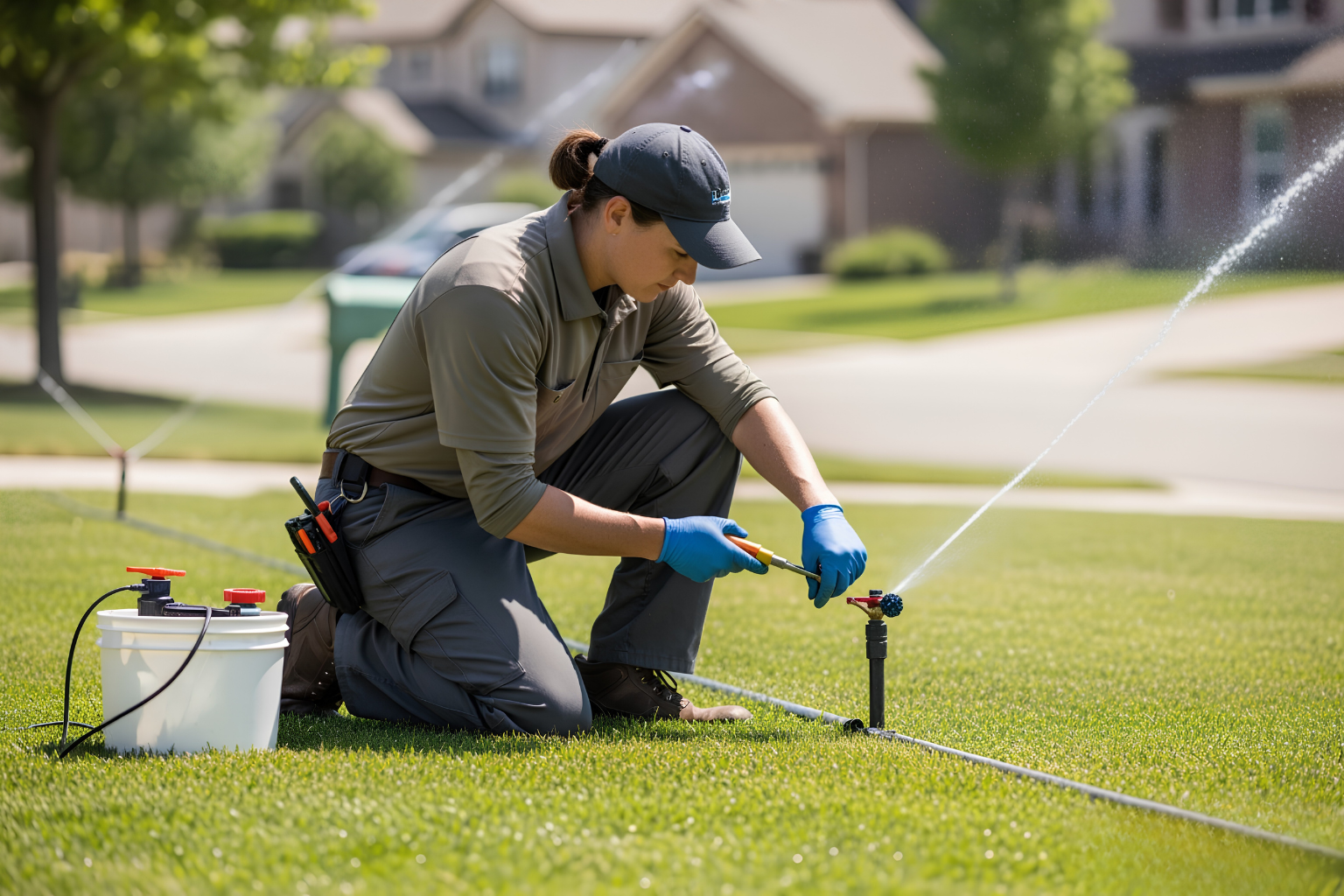
This is a topic I care a lot about. When you’re maintaining a sophisticated system, especially the modern “two-wire” systems common on larger Freehold Township estates, you’ll usually be offered one of two contract types: All-Inclusive or Time & Material (T&M).
I strongly advise against All-Inclusive contracts as a long-term strategy. They seem predictable, but they create a fundamental conflict of interest. In an all-inclusive deal, the contractor gets paid a flat fee regardless of how much work they do, which rewards shortcut maintenance and system neglect. If a technician spots a head that’s slightly out of alignment or a valve starting to weep, they’re incentivized to ignore it to protect that month’s margin, and deferred maintenance piles up.
This is what I call the “New Build Trap.” A new system needs very little maintenance for the first two years, so an all-inclusive contract looks like a great deal. As the system ages, though, repairs get deferred to keep the provider’s costs low. By the time an HOA board takes over a period I call the “Transition Crisis” the system is often badly degraded, thanks to the neglect that fixed-price models reward.
The “true cost” of proper maintenance which includes a zone-by-zone visual inspection and proactive repairs is often 50-75% higher than what flat-rate “all-inclusive” plans charge. However, T&M ensures that your technician is incentivized to actually fix the problems they find. Following Best Practices Irrigation Maintenance means paying for the time it takes to do the job right, which prevents the $20,000 “surprise” repair bill five years down the line caused by deferred maintenance.
Key Takeaways:
- Water Acts as the Vehicle: Fertilizer requires proper hydration to dissolve and travel to the root zone, but overwatering flushes those essential nutrients completely out of reach.
- Soil pH Dictates Uptake: Maintain a soil pH between 6.2 and 6.8 to prevent vital nutrients like phosphorus and zinc from locking up and becoming unavailable to your landscape.
- Containers Require Isolation: Potted plants lack deep soil reserves and suffer from rapid nutrient leaching, making controlled, water-soluble fertilizers necessary.
- Data-Driven Scheduling: Transition away from static mechanical clocks toward weather-based controllers and soil moisture sensors to avoid creating anaerobic, oxygen-free mud.
- Commit to Transparent Maintenance: Prioritize Time & Material (T&M) contracts over flat-rate “all-inclusive” alternatives to remove a technician’s financial incentive to defer critical system repairs.
Looking to Optimize Your Landscape’s Hydration? Successfully maintaining a balance between yard watering schedules and soil health requires an optimized delivery system. If you want to cut utility waste, prevent nutrient runoff, and protect your lawn’s root systems, explore our sustainable smart irrigation services or reach out to our team to schedule an on-site system evaluation.

Recent Posts
Why Sprinkler Wire Splices Fail Underground: And How to Fix It
Gov. Murphy Signs Irrigation Enforcement Bill: What NJ Homeowners Should Know