
Sprinkler Showdown: Comparing the Pros and Cons of Different Types

Why Choosing the Right Sprinkler Saves Money and Water
Pros and cons of various Sprinkler types vary significantly, and choosing the wrong one for your yard can mean dry patches, wasted water, and higher bills.
Here’s a quick breakdown of the most common sprinkler types and how they compare:
| Sprinkler Type | Best For | Coverage | Avg. Cost | Key Con |
|---|---|---|---|---|
| Stationary | Small yards | Up to 1,800 sq ft | $9–$18 | No movement, limited range |
| Oscillating | Medium rectangular lawns | Up to 4,000 sq ft | $6–$25 | High evaporation loss |
| Rotary | Medium yards | Up to 3,000 sq ft | $7–$21 | Less effective on slopes |
| Impact | Large or windy yards | Up to 6,000 sq ft | $5–$33 | Noisy; needs 50+ PSI |
| Traveling | Large, irregular lawns | Hose-length dependent | $67–$100+ | Gets stuck on slopes |
| Bubbler | Trees, shrubs, spot watering | ~5 ft diameter | $3–$9 | Inefficient for full lawns |
| In-Ground Pop-Up | All yard sizes | Customizable | ~$0.60/sq ft (installed) | Higher upfront cost |
| Drip Irrigation | Gardens, beds, shrubs | Root-zone targeted | ~$490 avg. (installed) | Not ideal for turf grass |
The right system can cut water usage by up to 30% and encourage deeper root growth, making your lawn more drought-resistant over time.
But no single sprinkler type works for every yard. Your soil, water pressure, yard shape, and plant types all matter.
This guide focuses strictly on comparing different hardware options for residential lawn and garden watering. For custom property layouts, see our Residential Landscape Irrigation Systems Design guide. For seasonal maintenance, read our guide on How to Winterize Your Sprinkler System. For immediate professional installation, visit our Irrigation Services page.
Sprinkler Types: A Comprehensive Comparison
When I sit down with a homeowner in Manalapan or Rumson, the first thing we look at isn’t just the grass, it’s the “physics” of the yard. Selecting the right hardware is a balancing act between several critical factors.
The Primary Selection Factors
- Yard Size and Shape: If you have a small, 20-foot wide strip of grass in Little Silver, a massive impact sprinkler will just water your neighbor’s siding. Conversely, using a small stationary head for a sprawling Marlboro estate is a recipe for a brown lawn.
- Water Pressure (PSI): This is the heartbeat of your system. Most residential homes in New Jersey sit between 40-60 PSI. If your pressure is too low, your heads won’t pop up; if it’s too high, you’ll get “misting,” where water evaporates before it even hits the ground.
- Soil Type: Our Jersey soil varies. Sandy soils (common near the shore in Belmar or Brick) need frequent, shorter watering because they drain fast. Clay-heavy soils need slow, steady cycles to prevent runoff.
- Lawn Age: New seed or sod is delicate. You need a gentle mist. Using a heavy-hitting impact sprinkler on a brand-new lawn can actually wash away the seeds or damage the young shoots.
Evaluating Portable Hose-End Sprinklers
For many, the journey starts with a trip to the local hardware store for a hose-end attachment. These are great for DIYers or those with very small areas, but they come with trade-offs.
- Stationary Sprinklers: These are the simplest. They spray in a fixed pattern (circle, square, or heart).
- Pros: Very cheap; great for targeted spots.
- Cons: You have to move them constantly; high risk of “puddling.”
- Oscillating Sprinklers: The classic “fan” sprayer that kids love to run through.
- Pros: Best for rectangular yards; gentle spray.
- Cons: High evaporation rates because the water spends so much time in the air.
- Impact Sprinklers: The ones that make the “click-click-click” sound.
- Pros: Excellent for large areas (up to 6,000 sq ft); wind-resistant droplets.
- Cons: Can be too powerful for delicate flowers or new grass.
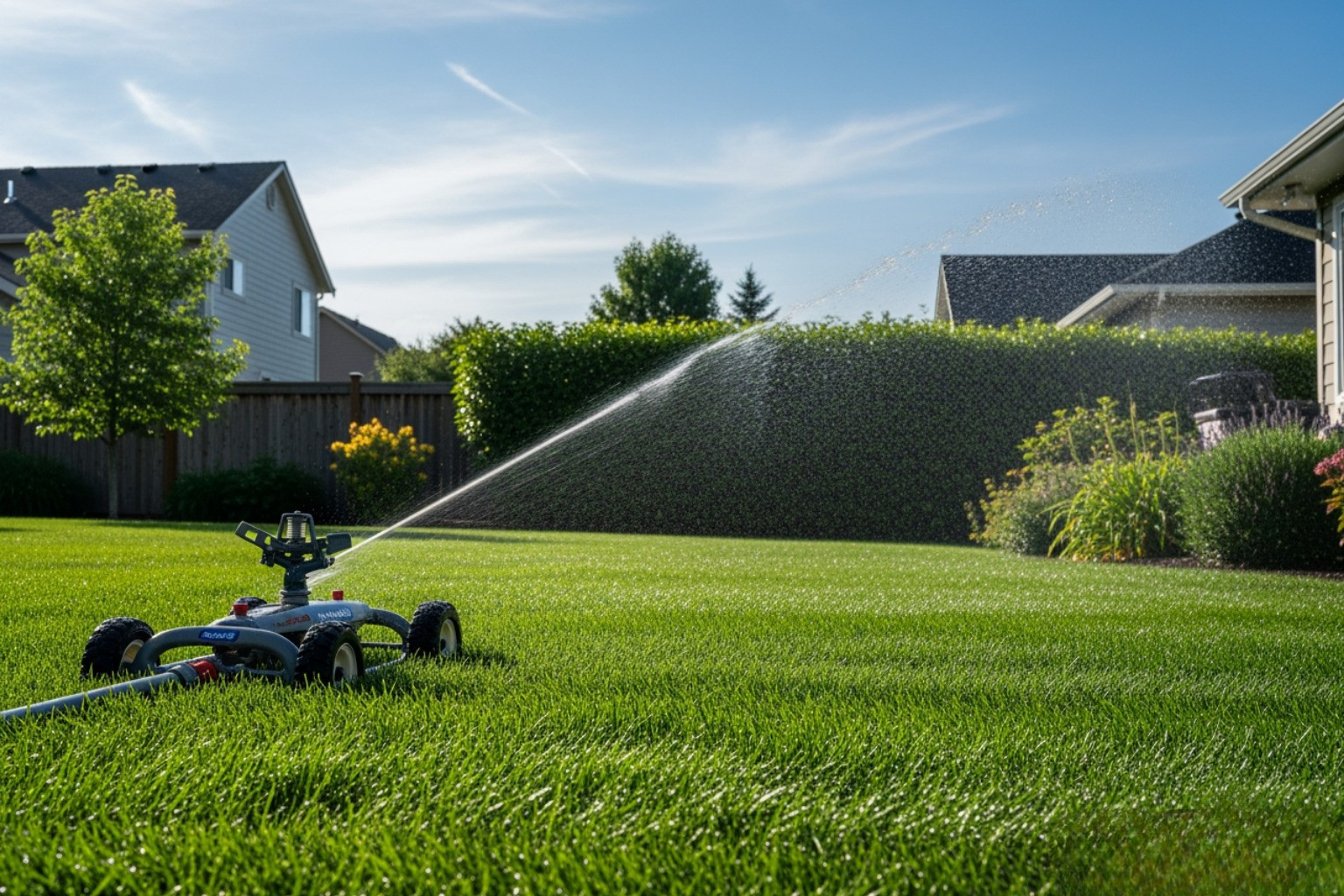
- Traveling Sprinklers: Think of these as a “lawn Roomba.” They follow the path of your garden hose.
- Pros: Great for long, irregular yards; automatic shut-off.
- Cons: They are heavy and can get stuck in soft soil or on hills.
If you’re curious about the mechanics of the “lawn tractor” style, this video shows How To Set Up a Travelling Sprinkler.
The Advantages of In-Ground and Smart Sprinklers
If you’re looking for a “set it and forget it” solution that actually increases your property value in places like Middletown or Holmdel, in-ground is the way to go.
- Pop-Up Spray Heads: These stay hidden in the grass until the water turns on. They are best for areas less than 25 feet wide. Most nozzles have a radius of 4-15 feet.
- Pros: Clean look; precise coverage.
- Cons: If the seals wear out, you’ll find your sprinkler head not popping up correctly.
- Rotary Heads (Rotors): These use a rotating stream of water. They are the workhorses for larger lawns (usually areas wider than 18 feet).
- Pros: More efficient than sprays; better for slopes because they apply water slower, allowing it to soak in.
- Cons: More moving parts means more potential for mechanical failure over time.
- Shrub-Style Heads: These are mounted on fixed risers above the foliage.
- Pros: Reach over tall plants.
- Cons: They are a tripping hazard and can be unsightly. I usually recommend high-pop-up heads (6″ or 12″) instead to keep them hidden when off.
One of the most common questions I get is ‘How many sprinkler heads per zone‘ can I have? The answer depends entirely on your water flow (GPM) and pipe size—get it wrong, and the last head on the line will barely dribble.
Drip Irrigation vs. Traditional Sprinklers
I’ll be honest: if you’re watering flower beds or a vegetable garden with an overhead sprinkler, you’re doing it wrong. Overhead watering can cause leaf spot and disease on ornamental plants.
- Drip Irrigation: This involves tubes with small emitters that deliver water directly to the roots.
- Pros: Saves up to 30-50% more water than sprinklers; reduces weeds because you aren’t watering the “empty” spaces between plants.
- Cons: Emitters can clog if you don’t have a good filter; you can’t see it working, so you have to monitor plant health.
For those in drought-prone areas or with expensive landscaping, I highly recommend you upgrade to a smart irrigation system that combines drip for the beds and high-efficiency rotors for the lawn. Drip installation is surprisingly affordable, costing about $490 on average for a standard garden.
Fire Protection vs. Lawn Irrigation Systems
While we specialize in keeping things green, it’s important to understand that “sprinklers” in a building context are a different beast entirely. In commercial settings or large estates in Colts Neck, you might encounter fire suppression systems.
- Wet Pipe: The most common. Water is always in the pipes. Simple and reliable.
- Dry Pipe: Used in unheated areas (like parking garages) to prevent freezing. Pipes are filled with pressurized air until a fire is detected.
- Preaction: Often used in museums or data centers. These require two “triggers” to activate, preventing accidental water damage. Single interlock systems are limited to 1,000 heads per valve.
- Deluge: Used in high-hazard areas like hangars. All heads are open, and the whole area is flooded at once.
For more on the technical side of life-safety systems, the NFPA has a great resource on the types of fire sprinklers.
Professional Selection and Maintenance Strategies
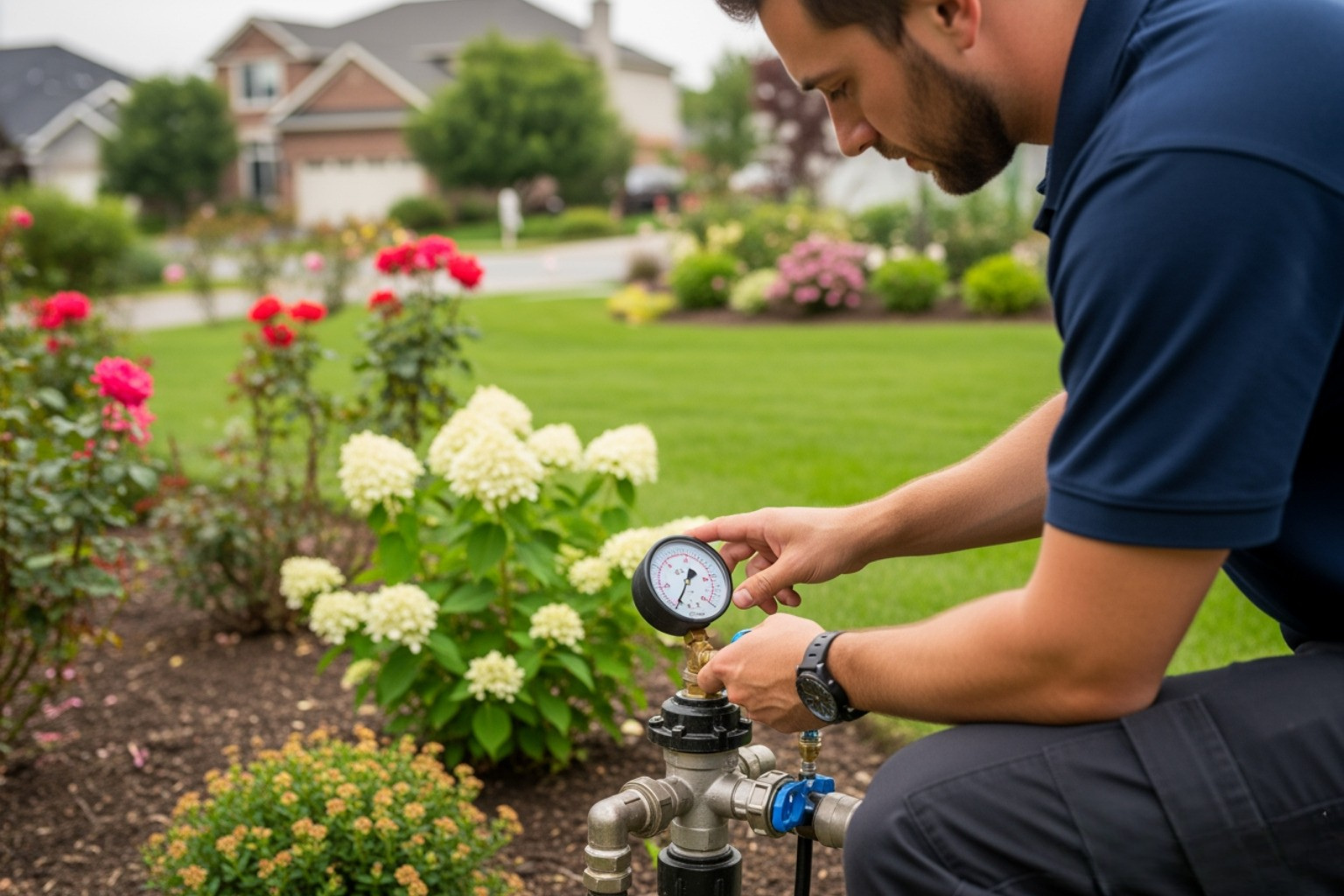
Choosing between DIY and professional installation usually comes down to the complexity of the project. A hose-end sprinkler is a 5-minute DIY job. An in-ground system involving trenches, backflow preventers, and residential landscape irrigation systems design requires a professional touch to ensure you aren’t violating local New Jersey codes (like those in Manalapan Township).
Common mistakes I see when people go it alone:
- Poor Spacing: Not achieving “head-to-head” coverage, leading to dry “donuts” in the lawn.
- Mixing Head Types: Putting a high-flow spray head on the same zone as a low-flow rotor. This results in one area being a swamp while the other is a desert.
- Ignoring the Seasons: Forgetting to winterize your sprinkler system in the fall. In New Jersey, if you don’t blow out the lines, they will freeze and crack.
The Risks of All-Inclusive Maintenance Contracts
While some companies promote “All-Inclusive” maintenance contracts as a convenient solution, they are never the ideal long-term strategy for a healthy landscape. In fact, fixed-price models often lead to significant system neglect due to misaligned financial incentives.
When a contractor operates on an all-inclusive fixed fee, every minute spent diagnosing a slow leak or cleaning a filter reduces their profit margin. This creates a dangerous incentive to defer maintenance. They may perform a superficial walk-through, ensuring water is spraying, while ignoring the underlying issues that lead to system degradation.
This is particularly evident in the “New Build Trap.” New systems require minimal repair for the first few years, making all-inclusive contracts look profitable for the provider. However, as the system ages, the lack of proactive care leads to a “Transition Crisis.” By year 5 or 6, when components naturally begin to wear, the cumulative effect of deferred maintenance results in sudden, widespread failures—often just as an HOA board takes over or a warranty expires.
At Environmental Designers Irrigation, we advocate for Time & Material (T&M) contracts to ensure your system receives the attention it deserves.
- No Financial Incentive for Neglect: Technicians are paid to find and fix problems, not ignore them to save time.
- Transparency: You pay only for the actual work performed and parts replaced.
- Prevention of System Degradation: Proactive repairs prevent the catastrophic failures common in neglected two-wire systems.
The “true cost” of best practices irrigation maintenance may appear higher than budget all-inclusive rates, but it protects your investment by preventing the long-term financial drain of a failing system.
Key Takeaways: Selecting the Best Sprinkler System
The most expensive sprinkler isn’t always the best one; the right choice comes down to matching the hardware with your yard’s specific layout, soil type, and water pressure.
- Respect the “Physics” of Your Yard: A massive impact sprinkler will waste water in a small yard, while stationary heads will leave dry patches on a sprawling estate. Always match the coverage radius to your lawn size.
- Use Drip Irrigation for Beds: Avoid overhead watering for vegetable gardens and flower beds; drip lines target roots directly, saving up to 50% more water and preventing leaf diseases.
- Prioritize In-Ground for ROI: While hose-end sprinklers are cheap, professionally installed in-ground systems (pop-ups and rotors) offer precise, automated coverage that boosts property value.
- Avoid All-Inclusive Contracts: When hiring a professional for ongoing maintenance, opt for Time & Material (T&M) contracts. Flat-fee models financially incentivize technicians to defer maintenance, leading to catastrophic system failures over time.
Ready to upgrade your property’s watering system?
If you are looking to save water and achieve a perfectly green lawn in Monmouth or Ocean County, NJ, our experts can design the perfect setup for your landscape.
Contact Environmental Designers Irrigation today to schedule a consultation.

Recent Posts
Why Sprinkler Wire Splices Fail Underground: And How to Fix It
Gov. Murphy Signs Irrigation Enforcement Bill: What NJ Homeowners Should Know